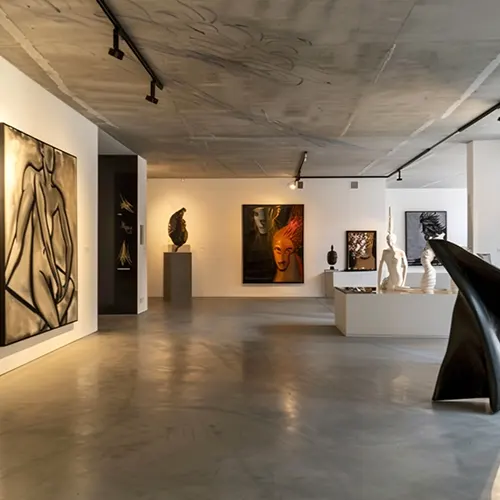
Many galleries rely on materials such as concrete, stone, plaster, glass, and exposed architectural surfaces.
While visually striking, these materials can create excessive reverberation and increase ambient noise as visitor numbers grow. During talks, performances, and events, reflected sound can also reduce speech clarity and listening comfort.
A well-designed acoustic environment helps maintain a sense of calm, supports communication, and allows visitors to engage more fully with the space and the work it contains.

Every exhibition space is shaped by how it will be experienced.
Some environments are designed for quiet contemplation, while others must accommodate guided tours, public programmes, performances, immersive installations, or multimedia exhibitions.
We develop each project around its specific requirements, considering room volume, circulation, materiality, acoustic behaviour, and visitor experience as part of a coordinated design process.
The objective is to create spaces that remain engaging, comfortable, and acoustically balanced across a range of conditions.
Acoustic performance should feel integrated into the architecture rather than introduced as a visible technical layer.
Wall systems, ceiling elements, finishes, and architectural details are coordinated to support both acoustic performance and curatorial intent.
In some projects, acoustic systems are concealed entirely. In others, they become part of the architectural language of the space.
The result is an environment that retains its visual character while providing greater acoustic control.

A gallery that feels calm without feeling quiet. Open without feeling uncontrolled.
An environment where visitors can focus, conversations remain comfortable, and events are experienced with greater clarity and composure.
When acoustics and architecture are developed together, the focus remains where it belongs — on the work itself.